Nature Through the Glass: A Gentler Somerset Guide for Days You Can't Leave the House
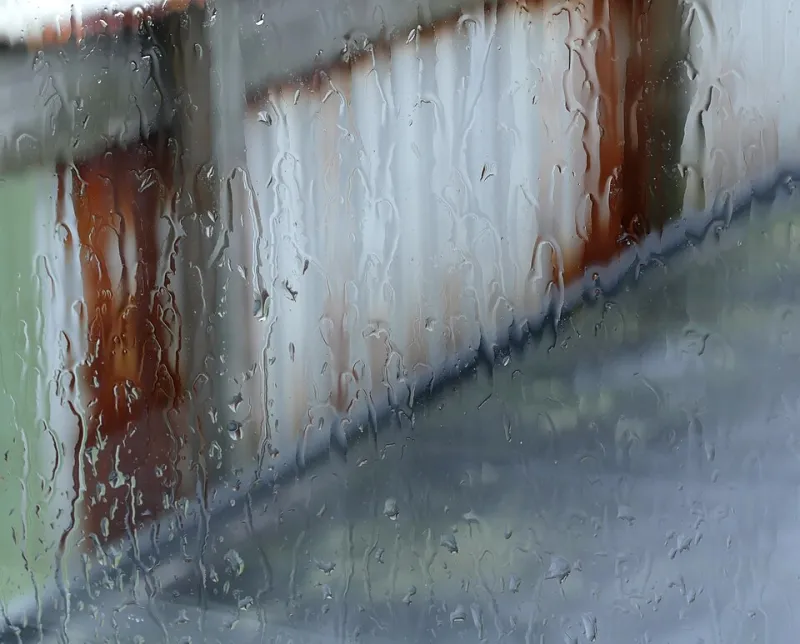
Photo: W.carter, CC BY-SA 4.0, via Wikimedia Commons
There is a particular kind of advice that turns up when you're struggling: get outside. Walk up a hill. Get some fresh air. Look at the view. It is usually said with warmth, and often by someone who genuinely wants you to feel better. But if leaving the house currently feels impossible, that advice can land like one more thing you are failing to do properly.
This is not an argument against the outdoors. Somerset is full of good air, wide skies and views that do something to your shoulders. But nature is not a test of effort, and fresh air is not a moral achievement. Some days, the most honest version of “getting outside” is opening a window. That counts. Not as a consolation prize — as a real, small point of contact.
When “just get outside” lands badly
The trouble with the instruction is that it skips the bit where you explain why you can't. Anxiety, depression, chronic pain, fatigue, caring responsibilities, mobility problems, agoraphobia, the sheer admin of finding shoes — any of these can make the front door feel like a border crossing.
Somerset can make this feel sharper because the countryside is so present in the way people talk. There's a field, a path, a tor, a coast. Everyone seems to know a walk. If you're not doing it, it's easy to feel like you're opting out of something wholesome that everyone else manages effortlessly.
You're not. You're having a hard time. And a hard time does not need a hiking route. It needs something small enough to be possible.
The windowsill is a valid viewpoint
You do not have to be standing in a meadow to notice the weather. From a window, you can watch rain move across the Levels, see the light change over the Mendips, or track a pigeon doing its strange, determined pigeon walk along a wall. If you're in a town, there's still sky. There's still a tree doing its thing. There's still the particular Somerset grey that makes a cup of tea feel like a sensible plan.
Try this: pick one window and give it thirty seconds. Not a mindfulness exercise you have to do perfectly. Just look. Notice one thing that is not your phone, your ceiling or the pile of washing. Cloud shape. Bare branch. Rain on glass. A bird being rude to another bird.
That's it. No streak to keep. No journal. No pressure to feel transformed. If it does nothing, it does nothing. You haven't failed at nature.
A doorstep is not a cop-out
If you can open the door but not go further, sit on the step. Wrap up. Take a mug with you if you like. Let the air hit your face for as long as feels manageable. Ten seconds is fine. A minute is fine. Going back inside is fine.
The doorstep has a useful quality: it is both inside and outside. You can retreat without having to explain yourself to anyone. If you live somewhere with a shared entrance, a balcony or a patch of concrete, the same idea applies. It's not about proving you can leave. It's about having a softer edge between you and the world.
Bring a bit of Somerset to the sofa
Connecting with nature indoors doesn't have to mean buying anything. A houseplant you already own, a bowl of herbs on the windowsill, a photo of a place you love, a bird feeder outside the kitchen window — these are small, low-demand ways of keeping the outside in.
Some people find sound helpful: rain, birdsong, a recording of a stream. It isn't the same as being there, and it doesn't need to be. It's a signal to your nervous system that the world is bigger than the room, without asking you to go and meet it head-on.
If screens are manageable, local nature trust websites and wildlife webcams can be a gentle way to look at places you can't get to today. If screens aren't manageable, ignore that. The window is enough.
Don't turn it into another job
The wellness world has a habit of taking something kind and turning it into a performance. Ten thousand steps. Cold water. A gratitude journal. Nature can be like that too: a demand to be outside, to be grateful, to be healed by a view.
You don't need to optimise your connection with the outdoors. You don't need to earn your place in it. A single look at the sky is not a treatment plan, but it is also not nothing. It is a small reminder that you are part of a world that carries on, and that you don't have to be at your best to be allowed in it.
When it is more than a bad day
There's a point where “I haven't been outside much” becomes something that deserves support. If you've been indoors for days or weeks, if leaving the house brings panic, if basic things like eating or washing have slipped, or if you're feeling hopeless, please don't try to fix it by being harder on yourself.
Speak to your GP surgery. You can ask for a phone or video appointment if going in feels too much. In Somerset, you can also self-refer to NHS Talking Therapies for anxiety and depression, and Mind in Somerset can point you towards local support. If you need to talk right now, Samaritans are free on 116 123, any time. If you feel at immediate risk, call 999 or go to A&E.
Fresh air is a good thing. It is not a substitute for help, and you should not have to prove you've tried hard enough before you're allowed some.
Ask for the version of help that fits
It can help to be specific. “I'm struggling to leave the house and the usual advice isn't working” is a valid opening line for a GP, a friend or a family member. “Could you sit on the step with me for five minutes?” is a valid ask. “I don't need a walk, I need company” is a valid thing to say.
Somerset is full of paths, hills and coastlines, and they will still be there when you're ready. Until then, the window counts. The doorstep counts. The cup of tea by the glass counts. You are not behind. You are just having a hard time, and you deserve kindness at the size you can manage today.