The Unnamed Years: When Perimenopause Turns Up as Anxiety in Somerset
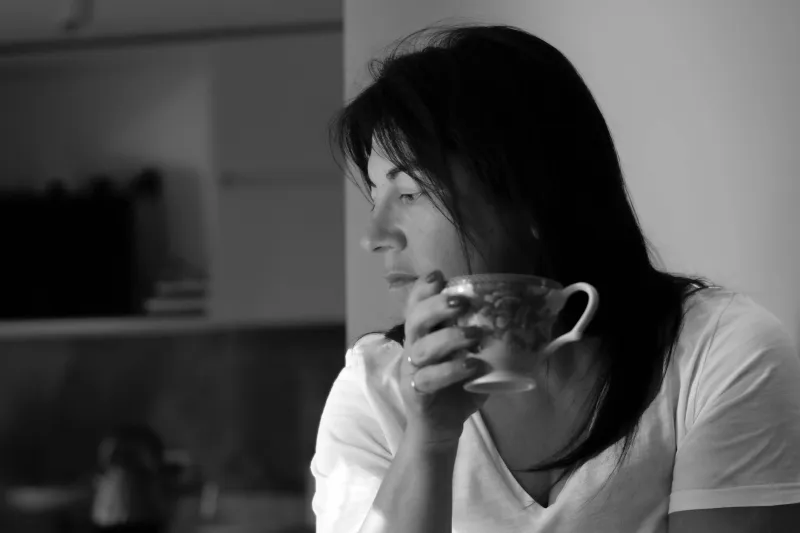
There's a particular kind of Tuesday where everything is technically fine and you are not. You slept badly again. You've read the same email four times. Someone leaves the dishwasher half-loaded and you feel a flash of fury so disproportionate it frightens you. By the afternoon you're convinced you've forgotten how to do your job, and by bedtime you're lying there running through a mental list of everything you've ever got wrong.
If that sounds familiar and you're somewhere between your late thirties and mid-fifties, it's worth asking a question nobody may have asked you yet: could this be perimenopause?
It doesn't always arrive as a hot flush
Most of us grew up with a very narrow picture of menopause — the fan, the flush, the punchline on a sitcom. What gets left out is that the years before your periods stop, the perimenopause, can be the bumpiest part. Oestrogen doesn't switch off politely; it lurches. And because it's involved in regulating mood, sleep and the stress response, the first thing many people notice isn't a physical symptom at all.
It's anxiety. Sometimes rage. Sometimes a flat, grey low mood that doesn't match your circumstances. Sometimes a sudden intolerance of alcohol, or palpitations, or a brain-fog that makes you wonder, quietly and horribly, whether something is happening to your memory.
Perimenopause commonly runs for years rather than months, and it can start in your late thirties. It also affects people who've had a hysterectomy, people on certain hormonal treatments, and people who don't fit the standard script at all — including trans and non-binary people, whose experiences are too often left out of the conversation entirely.
Why it so often gets labelled 'stress'
Because the symptoms overlap so neatly with stress, burnout and low mood, that's usually the first label applied — and sometimes it's the right one. Stress is real, and Somerset life has plenty of it: long drives to work, caring responsibilities, seasonal work, the cost of everything.
But being told it's 'just stress' when it isn't can cost you years. So can being told you're 'too young'. If your gut says something has shifted — that the anxiety feels hormonal, cyclical, unfamiliar — it's worth pursuing.
What's actually worth tracking
You don't need an app or a colour-coded chart. A notes file on your phone is plenty. Over four to six weeks, jot down:
- Your cycle, however irregular it's become — dates, flow, anything unusual.
- Sleep, specifically the 3am wake-ups and whether you get back off.
- Mood and anxiety, and whether they cluster around particular days.
- Physical signals — flushes, night sweats, joint aches, palpitations, headaches, changes to your skin or hair.
- Periods of rage or tearfulness that feel out of proportion to the trigger.
- Anything that's changed — alcohol tolerance, libido, word-finding, concentration.
Two or three lines a day is enough. Bring it with you. A pattern on paper is far harder to dismiss than a vague feeling in the room.
How to raise it without being brushed off
Book a longer appointment if you can — a standard ten minutes is tight for this, and Somerset GP surgeries will often accommodate a double slot if you explain what it's for when you book.
Open with the pattern, not the diagnosis: "I've been keeping a note for six weeks. I'm waking most nights at 3am, my anxiety has climbed sharply, and my periods have gone from regular to unpredictable. I'd like to talk about perimenopause."
A few things worth knowing before you go:
- Current NICE guidance says blood tests aren't needed to diagnose perimenopause in most people over 45 — the diagnosis is based on symptoms and history. Under 45, testing may be considered.
- Bring your tracking notes, and bring a sentence about how it's affecting daily life — work, sleep, relationships.
- It's completely reasonable to ask about treatment options, including HRT, and about non-hormonal routes if HRT isn't right for you.
- If you feel dismissed, you can ask for another GP in the practice, or a second opinion. That's not making a fuss; that's standard.
If low mood or anxiety is the loudest part, you can also go around the GP entirely: Somerset Talking Therapies takes self-referrals online or by phone, free on the NHS, no doctor's note required. Many of their practitioners now ask about hormonal stage as a matter of course — but say it out loud anyway. It's relevant to what kind of help works.
Support that already exists in Somerset
- Menopause Cafés — free, informal, volunteer-run meet-ups where people talk about menopause over a cuppa. They've spread across the county in recent years; check local listings for Taunton, Frome, Wells and the surrounding villages, or ask at your library.
- Somerset Talking Therapies — self-referral for anxiety and low mood, including CBT and guided self-help.
- Mind in Somerset and other local peer groups — good for the 'am I the only one' stage, which is often the loneliest one.
- Your pharmacist — genuinely useful for a plain-English chat about HRT options, interactions and what's available over the counter.
- Workplace conversations — more employers now have menopause policies or trained 'menopause champions'. If yours doesn't, occupational health or your union rep is a sensible first stop. You don't have to frame it as a confession; frame it as a practical request.
And if the dark afternoons are already pressing in, remember that anxiety and low mood in November are easier to manage when you've got people around you. A group counts. A walk with a friend counts.
For partners and friends: what actually helps
Don't diagnose. Don't say 'is it your age?' in a certain tone of voice. Do this instead:
- Believe the report. If they say the anxiety feels different, it is different.
- Take something off the plate without being asked — the school run, the food shop, the thing they always do at 9pm.
- Don't take the rage personally. It isn't about the dishwasher.
- Offer to come to the appointment if they'd like company, and let them do the talking unless they ask otherwise.
- Ask what helps tonight, not what fixes everything.
One last thing
If you've read this and recognised yourself, that recognition is information, not drama. You're not being oversensitive, and you're not making it up. Perimenopause is common, it's treatable, and the fact that nobody warned you about this bit doesn't mean you have to sit with it alone.
Start with the notes file. Then one conversation. That's enough for this week.