Twelve Tiny Somerset Things to Do When Your Brain Simply Won't Cooperate
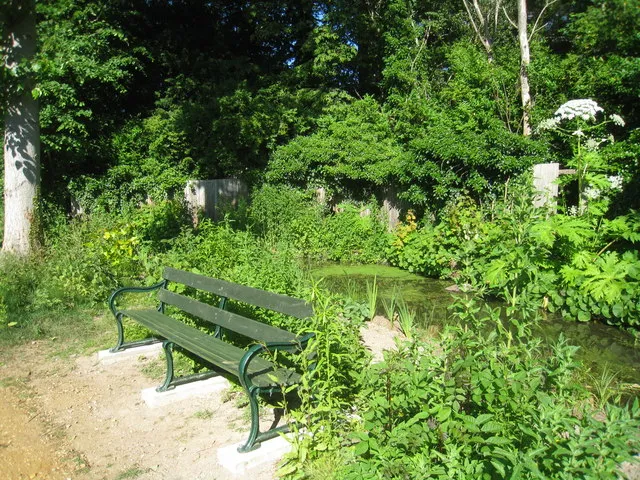
Photo: Sandy B , CC BY-SA 2.0, via Wikimedia Commons
Some days the advice is hilarious in its optimism. Drink two litres of water. Go for a brisk five-mile walk. Start a gratitude journal. Meanwhile you cannot decide whether to have a shower, and the thought of answering a text is genuinely upsetting.
So this is a different sort of list. Every item here takes under fifteen minutes, costs nothing, and requires no version of you that is currently available. Some will be useless to you today. That is fine. Pick one, or none.
First, the honest bit
These are small actions, not treatment. They will not fix depression, anxiety or burnout, and nobody here is going to suggest that they do. If you are on a waiting list, that is separate and still counts. If you have been feeling low for weeks, or things are getting worse rather than better, please speak to your GP — that is not overreacting, it is just sensible.
Two more things before the list. If you feel at immediate risk of harming yourself, call 999 or go to A&E. If you need to talk right now, Samaritans are on 116 123 free at any hour, and Shout is on 85258 for free text support. NHS 111 has a mental health option too.
Right. On with the small stuff.
Twelve things, in no particular order
1. Five minutes at a landmark you know well. Not a big walk. Just to the top of the road so you can see the Tor, or Brent Knoll, or the top of Cothelstone Hill, or the water at Wimbleball. Familiar views do something quietly useful to a scrambled head. Five minutes counts. Turn round whenever you like.
2. Sit in a library. Taunton, Yeovil, Bridgwater, Frome, Glastonbury, Wells, Minehead — Somerset's libraries are free, warm, and nobody will ask you what you are doing. You do not have to read. Sitting in a room with other humans, doing nothing, is a legitimate activity on a bad day.
3. Send the pre-written text. Open your notes app right now, while you are calm-ish, and write three messages: having a rough one, not ignoring you, will reply when I can; any chance of a chat later?; and no need to fix anything, just wanted to say hello. Next bad day, it is a copy and paste, not a creative writing exercise.
4. Go to a park with a bench. Vivary Park in Taunton, Collett Park in Shepton Mallet, Victoria Park in Frome, Blenheim Gardens in Minehead, Yeovil Country Park. Sit on the bench. Something about grass and trees and other people's dogs takes the volume down a notch.
5. Make the drink and drink it by a window. Not while scrolling. Just the drink, the window, and whatever the weather is doing over the Levels. Two minutes of not-consuming anything.
6. Use the free museum. The Museum of Somerset at Taunton Castle has free entry, as do several smaller local museums. Wandering past old objects for twenty minutes requires no conversation and no decisions, which is exactly the point.
7. Do the two-minute tidy. Not the house. One surface. The bit of kitchen worktop that is bothering you. Then stop, deliberately, while it still feels unfinished — the point is proving that a small thing is possible, not that the house is sorted.
8. Call a helpline and say nothing profound. You do not need a crisis to use Samaritans. You can ring and say you are having a flat, grey day and you did not want to be alone with it. That is a completely normal use of the service.
9. Name five things outside the front door. Step out, shut the door, and look properly. Wet leaves, a wheelie bin, a phone wire, a chimney, someone's cat. It is a grounding trick and it sounds daft and it works more often than it should.
10. Find a Men's Shed, chatty table or community café. There are Men's Sheds across Somerset, Chatty Café tables in various cafés, and warm-space sessions in community venues through the colder months. You do not need to be sociable. You need to be in a room where nobody expects anything.
11. Water something. A plant, a window box, a garden you have been ignoring since August. Looking after one small living thing is sometimes the only available evidence that you are still functioning, and that is worth having.
12. Write it down and close the book. Three minutes, no structure, no gratitude, no silver linings. Just whatever is rattling around, dumped onto paper so you do not have to keep holding it. Then shut the notebook and put it somewhere else.
What this list is not
It is not a substitute for care. It is not a claim that a bench in Vivary Park is therapy. And it is not an instruction to be positive, which is possibly the least helpful thing anyone says to a person having a bad brain day.
It is just a set of options that require almost nothing, for the days when almost nothing is exactly what you have got. If one of them makes ten minutes pass more kindly, that is a genuinely good outcome. If none of them do, that is information too — and it might be the moment to ring your GP, or Mind in Somerset, or a friend who will sit with you and not try to solve it.
You do not have to do this well. Doing it at all is plenty.